Regulatory
EU CosIng database
The European Commission's official cosmetic ingredient inventory. Over 36,000 entries with regulatory status (Annex II prohibited, Annex III restricted) and authorised functions.
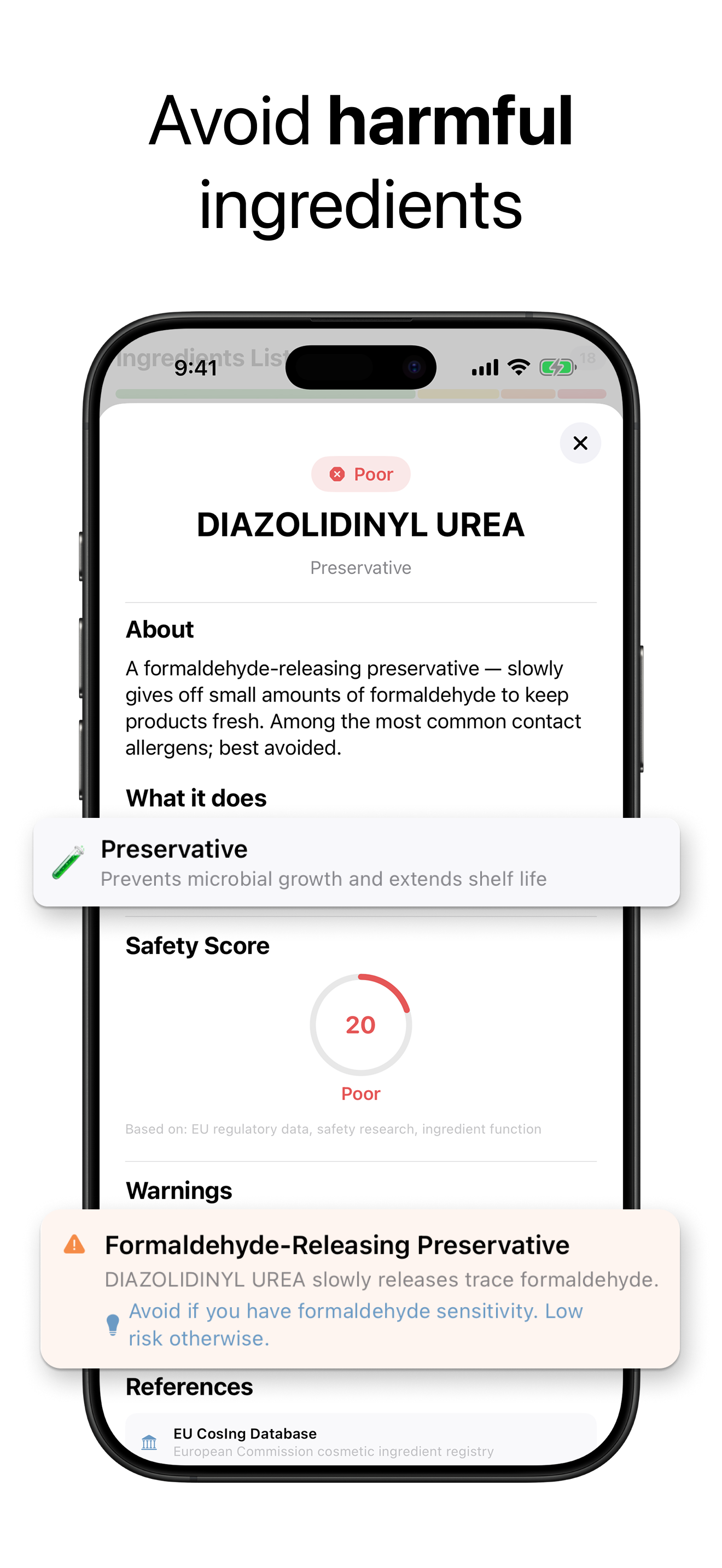
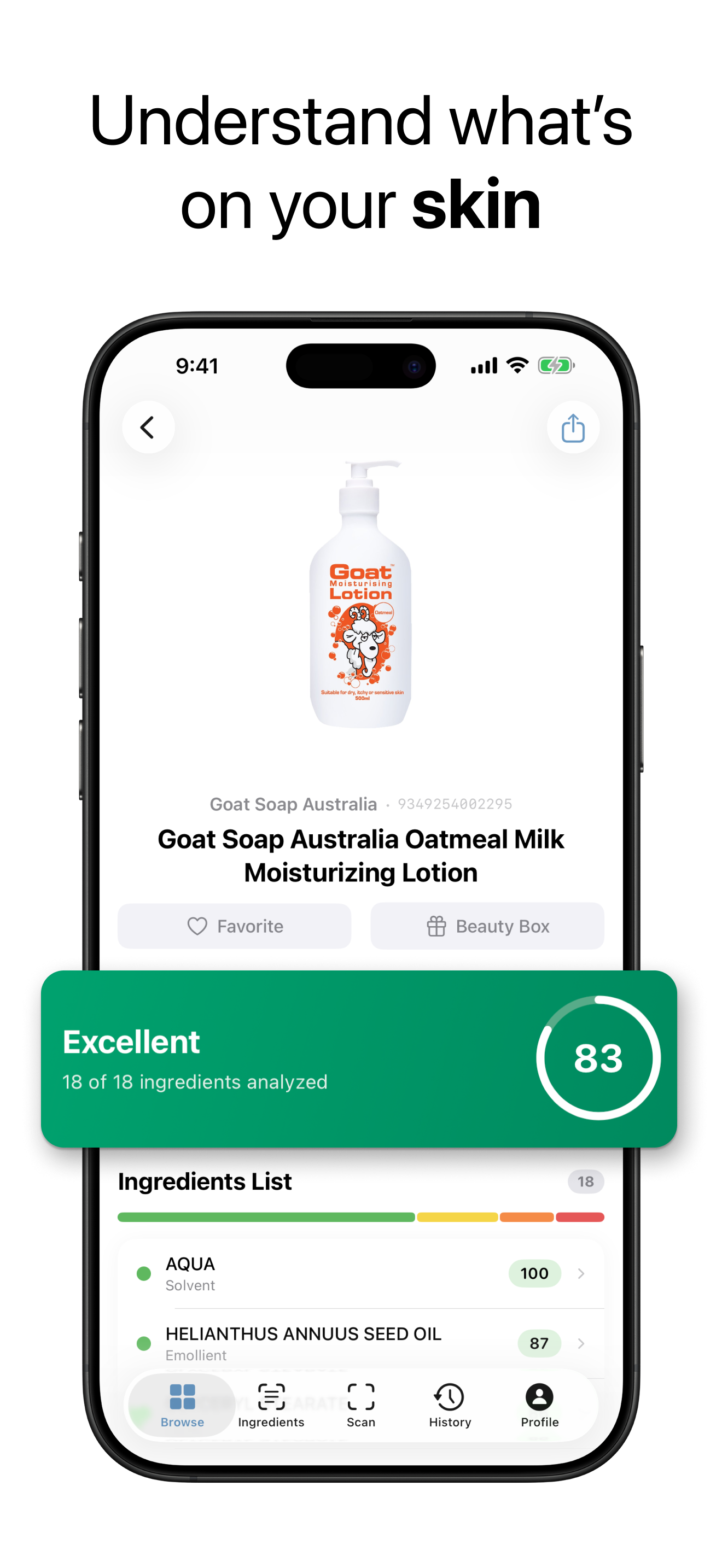
Scan any cosmetic or photograph any ingredient label, even on curved bottles or products without a barcode. Get a 0 to 100 safety score for every INCI ingredient, share with friends in one tap, every score grounded in EU CosIng, PubChem, and peer-reviewed research.
Launch promo: 30 days free with codePHLAUNCH30 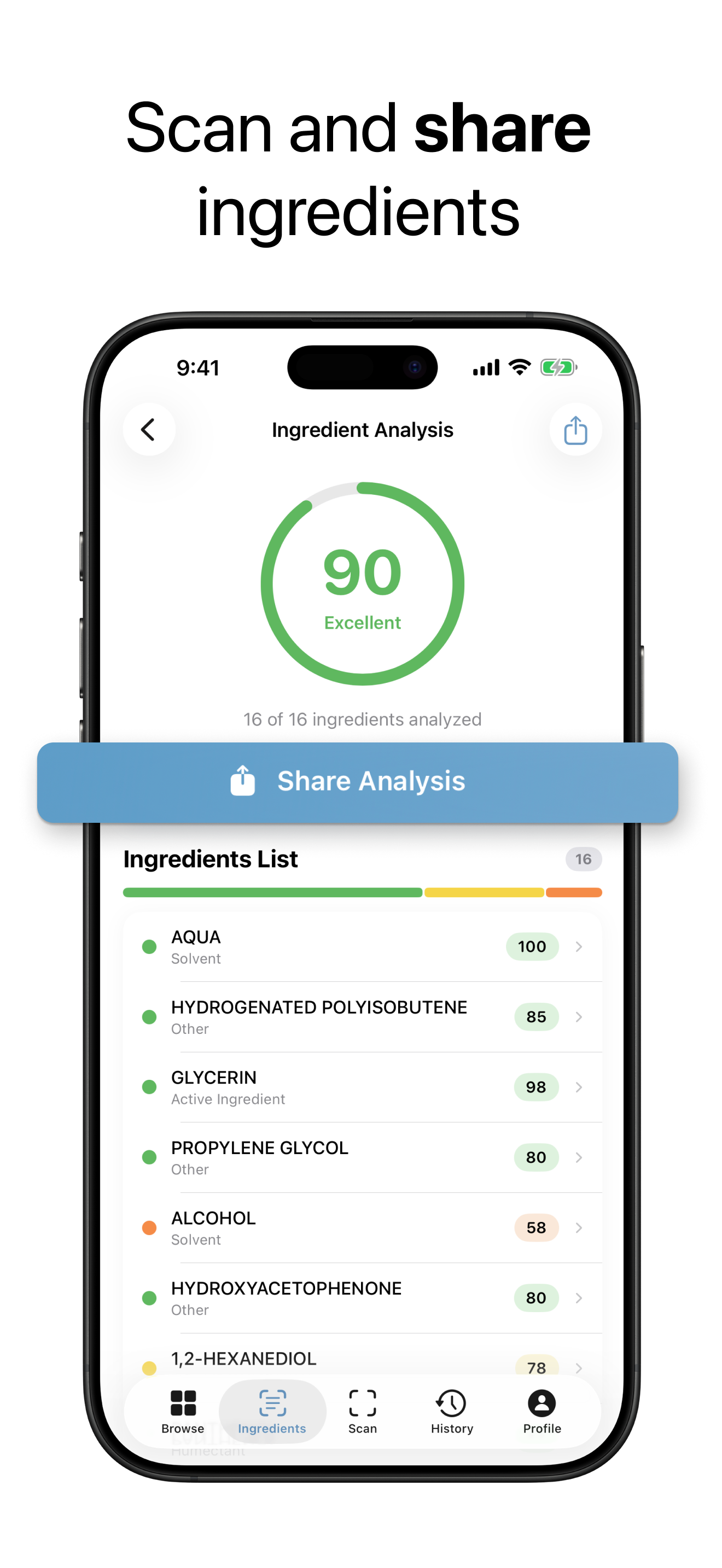
Sourced from
How it works
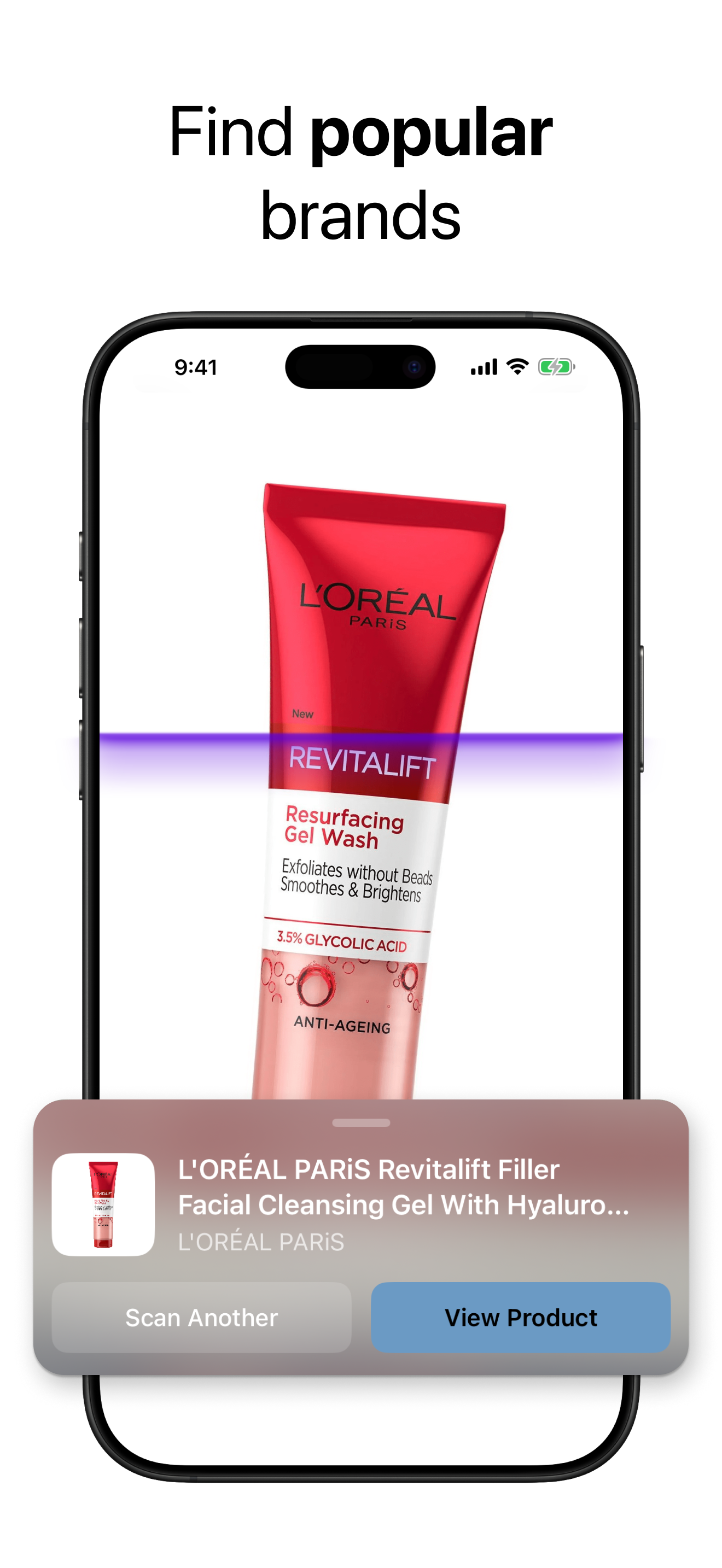
Point your camera at a product barcode for an instant database lookup, or photograph the back-of-pack ingredient list for OCR-driven analysis.
Each ingredient is matched to its CosIng entry, cross-referenced with PubChem hazard data, and assigned a function and concern profile.
Receive a 0–100 score per ingredient and an aggregate product score, with every input traceable to its regulatory or scientific source.
The product
LuxSense is a working tool, not a marketing one. Built around how cosmetics are actually formulated and regulated, with the depth a cosmetic chemist would want and the clarity a first-time buyer needs.
Instant database lookup against 2,700+ curated products plus a global fallback. Cached results stay free, forever.
Snap one to three photographs of any label. Multi-frame stitching handles wrap-around panels and small print.
Every score links to its source: a CosIng entry, a PubChem hazard code, a published study, or a peer-reviewed monograph.
No account, no tracking SDK, no photos retained. Scan history lives on your device only.
Built around EU regulation. Independent: no affiliate links, no sponsored ingredient rankings, no skincare brand has a seat at the table.
Read the full methodologySources of truth
Regulatory
The European Commission's official cosmetic ingredient inventory. Over 36,000 entries with regulatory status (Annex II prohibited, Annex III restricted) and authorised functions.
Scientific
The U.S. National Institutes of Health open chemistry database. Provides GHS hazard classifications, toxicity data and primary-literature links for every substance.
Product data
A community-driven, open-source catalogue of cosmetic products from across the world: INCI lists, barcodes, brand metadata, all under an open licence.
Common questions
LuxSense works with cosmetic and skincare products from any brand or region. The ingredient database covers over 36,000 cosmetic ingredients from the EU CosIng database (the European Commission's official registry), supplemented by PubChem hazard data and Open Beauty Facts product records.
Each ingredient is scored on a 0–100 scale using a transparent, evidence-based rubric: EU regulatory status (Annex II / Annex III restrictions), published hazard data from PubChem, in-use concentration, and ingredient function. Every score links back to its source. The full methodology is public.
Yes. Unlimited barcode scans are free forever, with three standalone ingredient-list scans per day. Premium (€4.99/month or €29.99/year, with a 7-day free trial) unlocks unlimited standalone scans and personalised skin-profile warnings.
No. Product photos are processed in real time for OCR and then immediately discarded. Photos are never stored on our servers, and our AI providers do not use them for model training.
LuxSense is an informational ingredient-analysis tool, not medical advice. Ingredient lists retrieved via barcode lookup or AI OCR may be incomplete or inaccurate. Always read the physical label for allergy decisions and consult a healthcare professional for any concern.
LuxSense is available on iOS (iPhone, iOS 16 and later). An Android version is on the roadmap.
LuxSense is built on the actual EU Cosmetics Regulation (EC 1223/2009, Annex II and Annex III), with a fully published scoring methodology and no commerce or affiliate model. Every input is cited: CosIng status, SCCS opinions, PubChem hazard codes, published studies. We also mark insufficient data as insufficient, rather than defaulting it to "likely safe."
Three major EU regulatory updates land between July and October 2026: the EU INCI Glossary refresh on 30 July (Implementing Decision 2025/1175), the expanded fragrance allergen disclosure on 31 July (Commission Regulation 2023/1545, expanding the declared list from 26 to 82 substances), and the leave-on microplastic phase-out preparation year. LuxSense is synchronised with all three.