Everything you need to write about LuxSense: boilerplate, founder bio, downloadable brand assets, and a direct media contact. If you're filing on tight deadline, the short boilerplate and key facts table are designed to drop straight into a piece.
Free (unlimited barcode scans + 3 daily ingredient-list scans). Premium €4.99/mo or €29.99/yr with 7-day trial
Privacy
No account required. Photos discarded after OCR. No tracking SDKs.
Boilerplate: pick the length that fits
50 words
Short
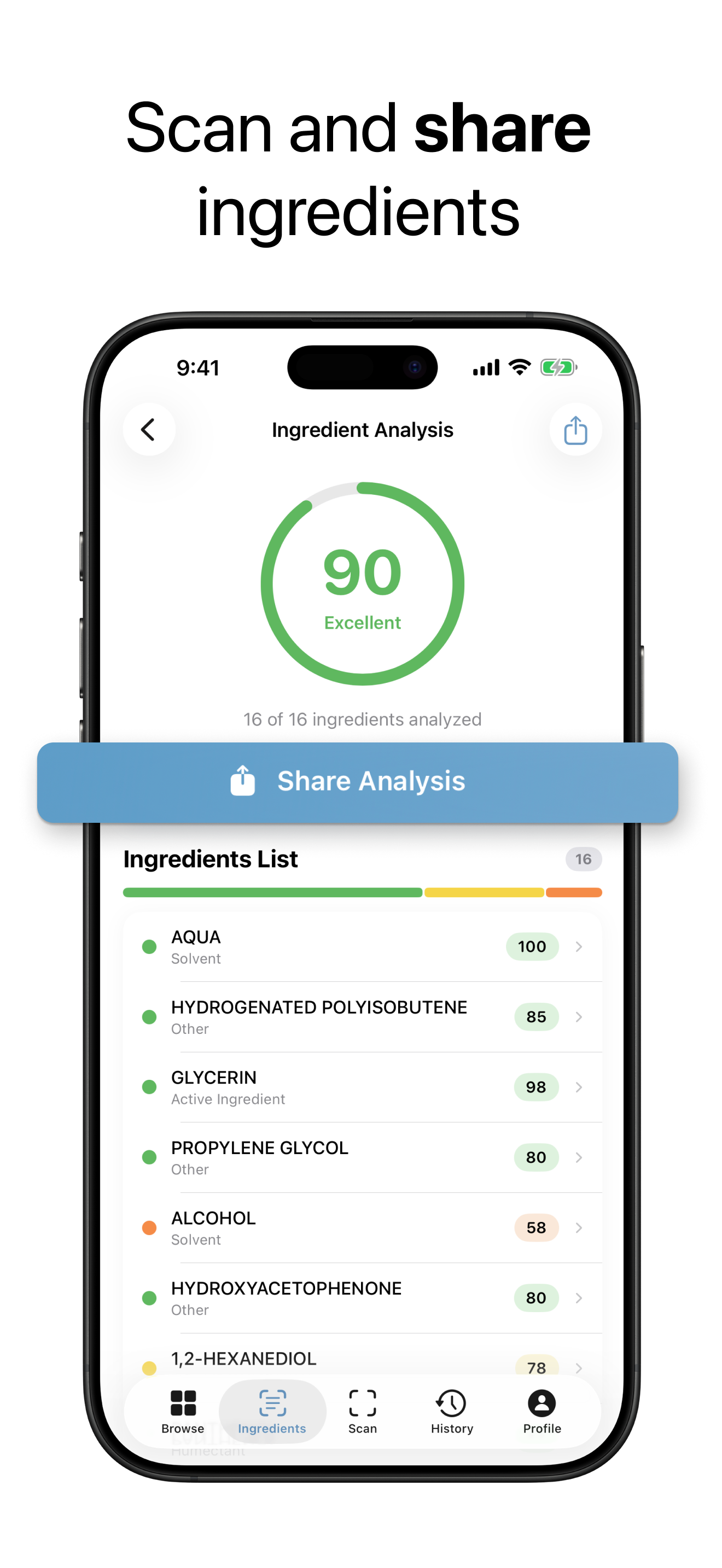
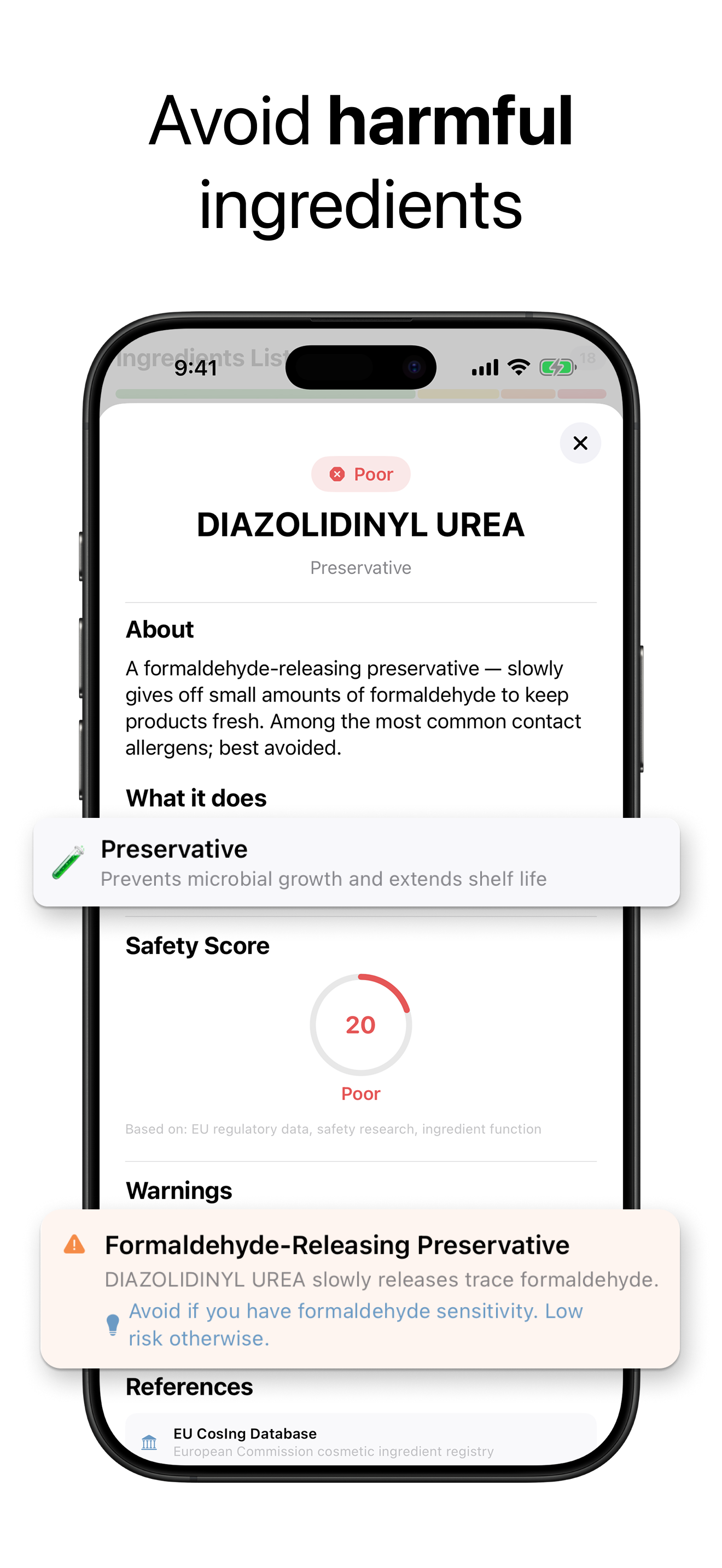
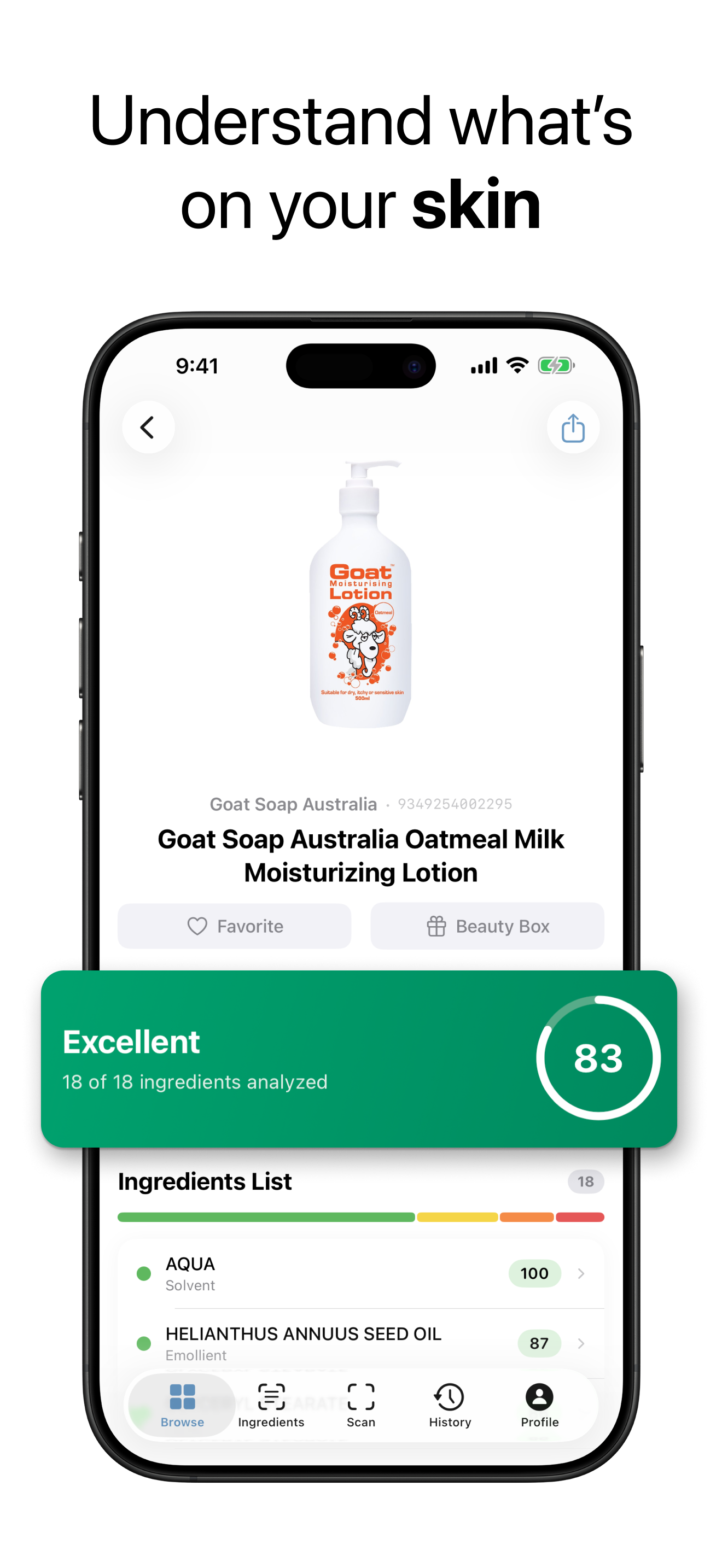
LuxSense is a cosmetic ingredient scanner for iOS. Scan a barcode or photograph an ingredient label and get a 0–100 safety score for every INCI ingredient, grounded in EU CosIng, PubChem and published research, with full methodology disclosure.
100 words
Standard
LuxSense is the cosmetic ingredient scanner that cites EU regulators and marks missing data as missing. Launched in 2026 for iOS, the app analyses barcodes and photographed ingredient labels against 33,000+ EU CosIng entries plus PubChem hazard data and published research. Every score links to its source. No affiliate commerce, no brand call-outs, no opaque proprietary scoring. The app is free with unlimited barcode scans and three standalone ingredient-list scans per day; premium subscription is €4.99 monthly or €29.99 annually with a 7-day free trial.
200 words
Long-form
LuxSense is an independent cosmetic ingredient scanner for iOS, launched in 2026. It analyses cosmetic products (by barcode or by photographed ingredient label) against the European Union's official cosmetic regulatory framework (Regulation EC 1223/2009, Annex II prohibited substances, Annex III restricted substances), the European Commission's CosIng glossary of 30,000+ ingredient names, PubChem hazard data from the U.S. National Institutes of Health, and the published scientific literature. Each ingredient receives a 0–100 safety score with every input traceable to its source. The full methodology is public at myluxsense.com/methodology. LuxSense operates with five public commitments: no affiliate links or commerce kickbacks, no brand call-outs by name, no "no-data-equals-safe" defaults, no alarmist vocabulary, and no private scoring. The app is built around the EU's three major 2026 cosmetic regulatory updates: the INCI Glossary refresh of 30 July, the expanded 82-allergen disclosure rule of 31 July, and the leave-on microplastic phase-out preparation. Free tier covers unlimited barcode lookups and three standalone ingredient-list scans per day. Premium subscription is €4.99 monthly or €29.99 annually, with a 7-day free trial.
Founder
LuxSense was built by an independent developer with a senior software engineering background and seven years in production financial and enterprise systems. The app reflects a single editorial position: that cosmetic ingredient safety information should be sourced from regulators, not invented by an app, and that gaps in the data should be flagged as gaps rather than defaulted to "safe."
The five public commitments
These are the editorial commitments LuxSense has published. They're worth quoting verbatim.
1. No affiliate links, no commerce kickbacks.
LuxSense does not sell products, link to retail with revenue-bearing affiliate codes, or accept payment for ingredient or product placement.
2. No brand call-outs by name.
Scores are at the ingredient level, not the product or brand level. You won't see "this brand is dangerous" framing.
3. No "no data = safe" defaults.
Insufficient toxicology or regulatory data is flagged as insufficient data, not defaulted to "likely safe."
4. No alarmist vocabulary.
"Toxic," "dirty," "chemical-free," and "free from" obscure more than they reveal. LuxSense uses regulator-grounded language: Annex II prohibited, Annex III restricted at X%, SCCS opinion pending.
For editors and producers looking for a hook. These are the angles LuxSense fits cleanly.
"An ingredient scanner with a methodology you can actually audit"
A methodology-transparent scanner where every score is traceable to its regulatory and scientific sources.
"What's changing on your skincare label this summer"
Three EU regulatory updates land in an 11-week window (30 July → 17 October 2026): the INCI Glossary refresh, the 82-allergen disclosure rule, and the microplastic phase-out preparation. LuxSense tracks all three in real time.
"Indie developer builds an EU-first cosmetic ingredient scanner"
Solo-built iOS app grounded in EU regulatory data. The technical and editorial approach, not the scale, is the story.
"How an iOS app reads a cosmetic label"
Vision OCR pipeline, multi-photo stitching, fuzzy ingredient matching against a 33,000-entry CosIng database. A how-it-actually-works piece for tech-adjacent media.
Brand assets
Logos, app icon variants, screenshots, and the brand colour palette. All free to use in editorial coverage. Please don't recolour the logo, crop the icon's safe area, or apply gradient overlays.