sunscreen
Sunscreen Filters Explained: Chemical, Mineral, and What's New for 2026
Sunscreen filters are the most heavily regulated category in cosmetics. Here's how every approved EU UV filter works, what's been restricted, and what the new-generation filters offer.
The single most important skincare product is sunscreen. It is also the most heavily regulated cosmetic category, and the one where formulation differences between countries are largest. A sunscreen from Korea, Japan, or the EU often contains UV filters that are not yet approved in the US, and vice versa. Here’s the complete picture of EU-approved UV filters in 2026, organised by how they work and what each is best for.
How UV filters work
Two fundamental categories:
Mineral filters (also called inorganic, or physical filters)
These sit on the surface of the skin and primarily scatter and reflect UV radiation (with some absorption as a secondary mechanism). Two filters in this category:
- Zinc oxide (INCI: Zinc Oxide)
- Titanium dioxide (INCI: Titanium Dioxide)
Both can be formulated as nano-particles (smaller, more cosmetically elegant, modern formulations) or non-nano (larger, leaves more visible white cast). In the EU, both nano forms are approved with specific size and surface-treatment requirements.
Organic filters (also called chemical filters)
These absorb UV radiation and convert it to heat. About 30 organic filters are approved in the EU under Annex VI, each with a specific concentration limit.
Most modern broad-spectrum sunscreens combine multiple filters, typically 4–6, because no single filter covers the entire UV spectrum efficiently. The blend matters more than any individual filter.
The UV spectrum and what each filter blocks
Ultraviolet light is divided into:
- UVA1 (340–400 nm): long UVA, penetrates deepest, drives long-term photoageing
- UVA2 (320–340 nm): shorter UVA
- UVB (290–320 nm): primary cause of sunburn and skin cancer
A complete sunscreen needs coverage across UVA1, UVA2, and UVB. SPF is a UVB metric; PA+ and UVA-PF are the UVA metrics.
EU-approved organic UV filters worth knowing
Modern broad-spectrum filters (the new generation)
These are the filters that distinguish EU and Asian sunscreens from US ones; most are not yet FDA-approved in the US.
- Tinosorb S (Bis-Ethylhexyloxyphenol Methoxyphenyl Triazine): broad-spectrum UVA + UVB, photostable, low absorption, well-tolerated. One of the gold-standard modern filters.
- Tinosorb M (Methylene Bis-Benzotriazolyl Tetramethylbutylphenol): hybrid filter that absorbs and scatters UV. Strong UVA coverage.
- Uvinul A Plus (Diethylamino Hydroxybenzoyl Hexyl Benzoate): strong UVA1 protection, photostable, used widely in EU and Korean sunscreens.
- Uvinul T 150 (Ethylhexyl Triazone): strong UVB protection, photostable, often paired with UVA filters.
- Mexoryl SX (Ecamsule): L’Oréal proprietary UVA filter, used widely in La Roche-Posay and Vichy sunscreens.
- Mexoryl XL (Drometrizole Trisiloxane): broad-spectrum, also L’Oréal proprietary.
If you’ve ever bought a European or Asian sunscreen and thought “this feels different and lighter than anything in the US,” it’s almost certainly because the formula uses several of these modern filters.
Older organic filters (still allowed, sometimes restricted)
- Avobenzone (Butyl Methoxydibenzoylmethane): the most-used UVA filter globally. Photo-unstable on its own; usually stabilised with octocrylene or other co-actives. Up to 5% in EU.
- Octocrylene (Octocrylene): UVB filter and avobenzone stabiliser. Recent SCCS review tightened concentration cap due to benzophenone-1 contamination concerns. Up to 10% in EU.
- Homosalate (Homosalate): UVB filter, concentration cap reduced to 7.34% in 2022 over endocrine-disruption concerns.
- Octinoxate (Ethylhexyl Methoxycinnamate): UVB filter, allowed at up to 10%. Banned in Hawaii (reef protection) but allowed in EU.
- Octisalate (Ethylhexyl Salicylate): UVB filter, well-tolerated.
Restricted or removed
- Benzophenone-3 / Oxybenzone (Benzophenone-3): concentration cap tightened to 2.2% in EU (down from 6%) over endocrine concerns. Banned in several jurisdictions (Hawaii, Palau).
- PABA (4-Aminobenzoic Acid): banned in EU since 2009 due to allergenicity. Still occasionally seen in older US sunscreens.
Mineral filters in depth
Zinc oxide
Zinc Oxide is the most-versatile mineral filter. It provides true broad-spectrum coverage (UVA + UVB) from a single ingredient and has a clean tolerance profile. Modern nano-formulations are cosmetically acceptable (less white cast) while retaining the safety profile.
EU allowance: up to 25% as a UV filter. Nano-zinc oxide requires specific size and coating standards.
Titanium dioxide
Titanium Dioxide is the second mineral filter. Primarily UVB and short UVA, less effective on long UVA than zinc oxide. Often paired with zinc to round out the spectrum.
EU allowance: up to 25% as a UV filter, also with nano-form size and coating specifications.
The “best” sunscreen filter blend
If you wanted to construct an ideal modern broad-spectrum sunscreen from the EU-approved palette, the building blocks would be:
Broad-spectrum core:
- Tinosorb S (Bis-Ethylhexyloxyphenol Methoxyphenyl Triazine)
- Tinosorb M (Methylene Bis-Benzotriazolyl Tetramethylbutylphenol)
- Uvinul A Plus (Diethylamino Hydroxybenzoyl Hexyl Benzoate) for additional UVA1
UVB reinforcement:
- Ethylhexyl Triazone (Uvinul T 150)
- Octisalate
This is the structure of the most cosmetically elegant high-protection European sunscreens. Brands like La Roche-Posay (Anthelios), Bioderma (Photoderm), Avène (B-Protect), Heliocare, and many Korean SPFs use combinations along these lines.
Sunscreen formulation considerations
Beyond the filters themselves, formulation matters:
- Photostability: avobenzone alone degrades in sunlight within hours. It must be paired with stabilisers (octocrylene, Tinosorb S) or replaced with photostable alternatives.
- Water resistance: the EU/ISO standard requires 40 minutes (water-resistant) or 80 minutes (very water-resistant) of retained protection after immersion testing.
- Texture and finish: modern filters allow much lighter, less cast-y, more wearable textures. The “thick white cast” of mineral-only sunscreens is largely a legacy formulation issue.
- Antioxidant supporting actives: vitamin C, vitamin E (tocopherol), niacinamide, and bisabolol all augment sunscreen efficacy by neutralising the UV-induced free radicals that get through.
How much to use
The SPF on the bottle is a laboratory measure of 2 mg of sunscreen applied per cm² of skin, a thick layer. Real-world application is typically 0.5–1.5 mg per cm², which means real-world SPF is typically half to two-thirds of the labelled value.
The practical guidance:
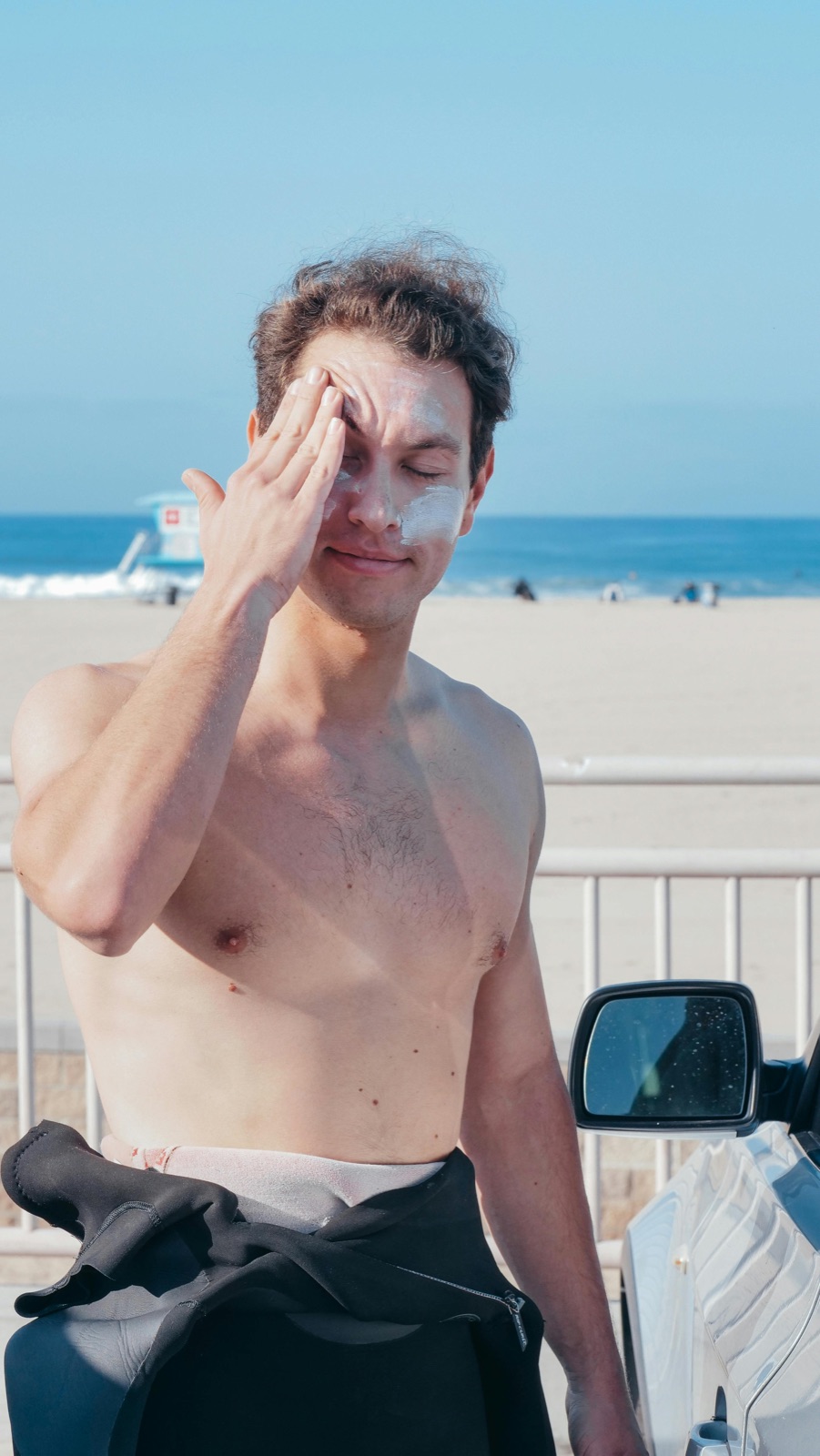
- Face only: approximately 1/4 teaspoon (1.25 ml)
- Face + neck: 1/2 teaspoon
- Full body: 1 shot glass (30 ml) for a typical adult body
- Reapply every 2 hours of sun exposure, or after swimming/sweating
If you are reapplying once a week from a tube of sunscreen, you are dramatically under-applying.
How LuxSense scores sunscreen filters
Each EU-approved UV filter is in our database with its individual safety profile. Scores reflect:
- Modern broad-spectrum filters (Tinosorb S, Tinosorb M, Uvinul A Plus, Uvinul T 150): high scores (85–95), excellent tolerance and photostability, clean regulatory profile
- Older organic filters: moderate scores (60–80), reflecting concentration restrictions and the SCCS review history
- Mineral filters: high scores (90+), no regulatory concerns at approved concentrations and nano-specifications
- Restricted filters (benzophenone-3, homosalate at tightened caps): moderate-to-low scores, reflecting concentration limits
A high-scoring sunscreen typically uses a blend of modern broad-spectrum filters with mineral support, formulated with antioxidant adjuvants.
FAQ
Are mineral filters safer than organic filters?
Not necessarily. Some older organic filters had documented concerns (oxybenzone, homosalate) that drove tightened caps. Modern broad-spectrum filters (Tinosorb, Uvinul) have safety profiles comparable to or better than mineral filters. The “mineral is safer” narrative is partially outdated.
Why is European sunscreen so different from US sunscreen?
The US FDA classifies sunscreen as an over-the-counter drug, which requires extensive separate approval for each new filter. The EU classifies sunscreen as a cosmetic, allowing faster approval of new filters through SCCS review. The practical consequence: the EU has ~30 approved filters; the US has ~15. Most of the modern broad-spectrum filters are EU-only.
Does SPF 50 actually protect more than SPF 30?
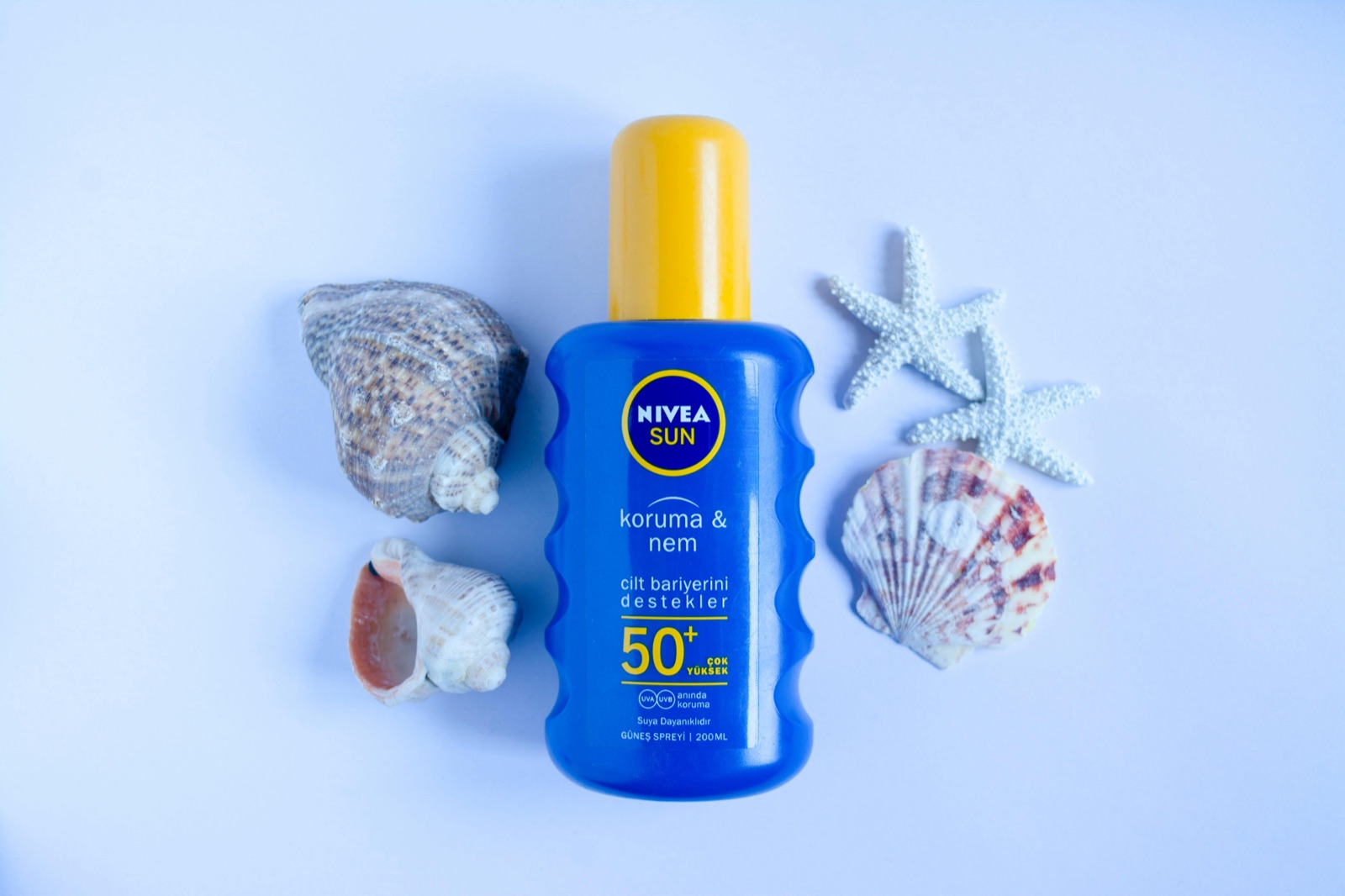
Marginally. SPF 30 blocks ~97% of UVB; SPF 50 blocks ~98%. The difference is small in laboratory conditions and even smaller in real-world application. The bigger driver of real-world protection is the amount applied and reapplication frequency.
Browse the UV filter profiles or scan any sunscreen with LuxSense to see its complete filter blend and broad-spectrum coverage rating.