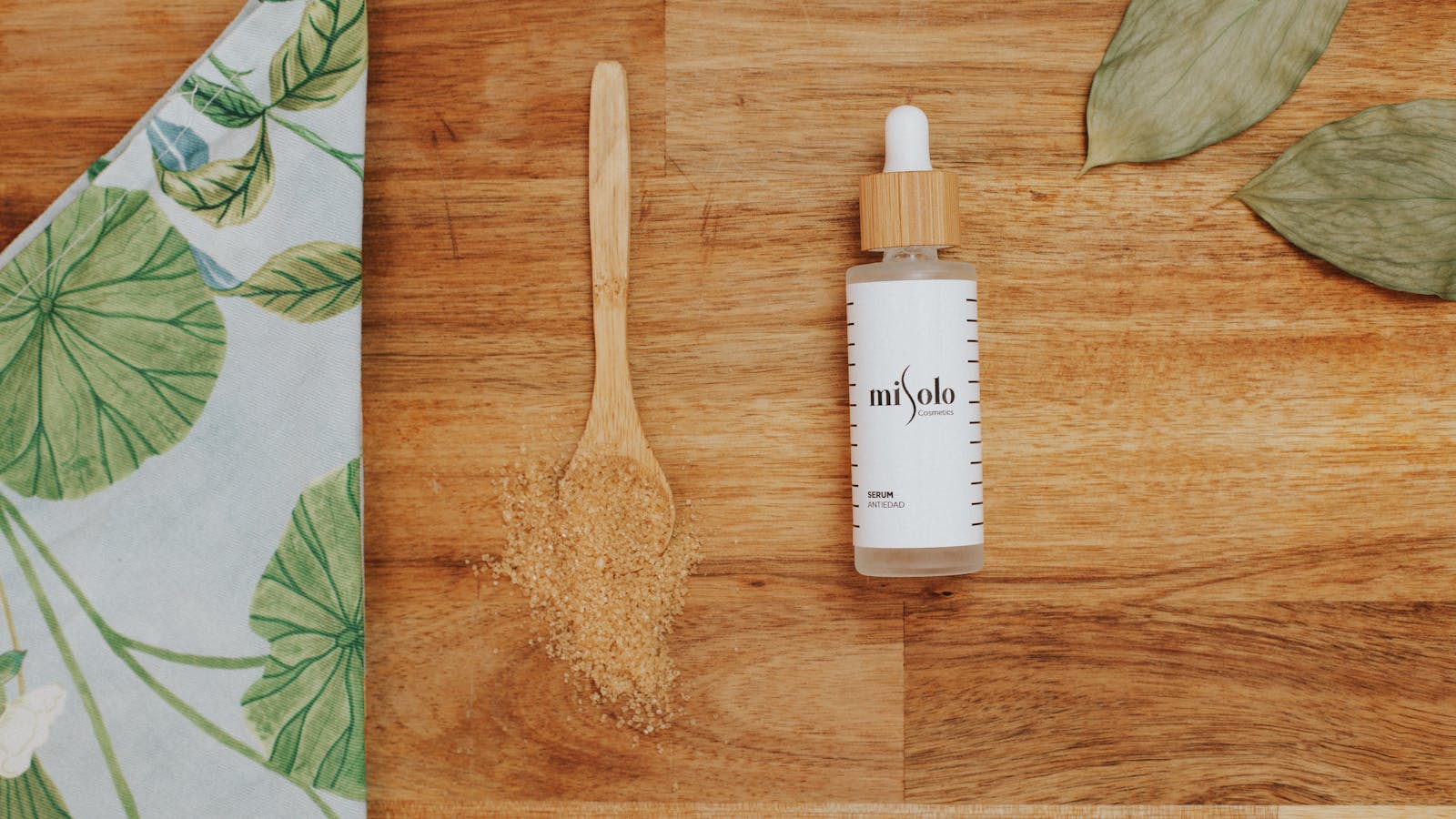
glycolic acid
Glycolic Acid and AHAs: Exfoliation 101
How alpha hydroxy acids work, why glycolic acid is the most-studied, and how to choose between glycolic, lactic, mandelic and the new generation of AHAs.
Alpha hydroxy acids (AHAs) are the chemical exfoliants that built modern skincare. They predate retinol’s mainstream moment, predate niacinamide’s hype cycle, and remain the single most-studied class of resurfacing ingredients available without a prescription. Knowing the differences between them is the difference between glowing and inflamed.
What AHAs are
AHAs are a family of small, water-soluble acids that loosen the bonds between dead skin cells on the surface of the stratum corneum. Where physical exfoliants scrub cells off mechanically (often unevenly, sometimes traumatically), AHAs dissolve the protein “glue” (desmosomes) that hold those cells in place. The cells release, the surface smooths, and the deeper layers are exposed and stimulated.
The main cosmetic AHAs:
- Glycolic Acid: smallest molecule, deepest penetration, strongest action
- Lactic Acid: larger, gentler, also a humectant
- Mandelic Acid: even larger, slowest penetration, gentlest
- Citric Acid: usually a pH adjuster rather than the active exfoliant
- Malic / Tartaric Acid: supporting actives in multi-acid blends
The general rule: smaller molecule, deeper penetration, stronger effect, higher irritation risk. Glycolic at one end, mandelic at the other.
Glycolic acid in depth
Derived originally from sugar cane, glycolic acid has the smallest molecular weight of the cosmetic AHAs. It passes through the stratum corneum efficiently, which is why it produces the most dramatic surface change, and also why it stings the most in the first applications.
Clinical effects with strong evidence:
- Improved skin texture and brightness within 4–6 weeks
- Faded surface hyperpigmentation over 8–12 weeks
- Increased dermal collagen with prolonged use (12+ weeks at 8–10%)
- Improved penetration of other actives applied alongside
The EU allows glycolic acid in leave-on cosmetics up to 4% at pH 3.8 or higher. Higher concentrations (up to 10%) are reserved for rinse-off or professional peel products. The “30% AHA peel at home” trend that swept social media is not legally sold in EU cosmetics.
Lactic acid
Lactic acid is the second most-used AHA and the more sensible starting point for most people.
It’s larger than glycolic, so it penetrates more slowly and less deeply: less stinging, slower visible change, but a much wider tolerance window. Lactic acid is also a natural humectant, which is unusual for an exfoliant. It both dissolves dead skin and pulls moisture into the surface, so it doesn’t dry the skin out the way glycolic can.
Lactic acid is the right starting AHA for:
- Sensitive skin
- Dry skin
- People who tried glycolic and reacted badly
- First-time AHA users
Mandelic acid
Mandelic acid is the gentlest of the mainstream AHAs and increasingly popular in melanin-rich skin, where glycolic can trigger post-inflammatory hyperpigmentation. Its larger molecule produces the slowest, most controlled exfoliation.
Mandelic acid is also mildly antibacterial, which makes it useful in acne-prone skin where strong AHA irritation could trigger inflammatory breakouts.
How to start
The same rules as retinol apply: start low, go slow, sunscreen always.
Twice-weekly toner approach: A 5–8% glycolic acid toner at pH 3.5–3.8, applied after cleansing on alternate nights. Pair with niacinamide and a ceramide moisturiser. Build up to 3-4 nights a week over 6-8 weeks if your skin tolerates it.
Weekly mask approach: A 10% AHA mask once or twice a week. Stronger pulses, longer recovery. Better for resilient skin types comfortable with chemical exfoliation.
Daily low-strength approach: A 2–3% lactic acid lotion daily. Slow but cumulative effects with minimal irritation. The right entry point for sensitive skin.
What AHAs can’t do
A common misconception: that AHAs replace the deeper-acting ingredients like retinol. They don’t. AHAs work in the stratum corneum, the outermost layer. Retinoids work in the deeper epidermis and the dermis. They are complementary, not interchangeable.
AHAs also don’t treat acne the way salicylic acid does. They smooth surface texture and even tone, but they don’t penetrate into pores. For comedonal acne, BHA is the right tool.
What to pair AHAs with
- Hyaluronic acid + ceramide moisturiser: Always. Exfoliated skin needs hydration support.
- Niacinamide: Reduces AHA irritation, supports barrier recovery.
- Peptides: Complementary mechanism (dermal collagen support).
- Vitamin C: Use AHAs at night and vitamin C in the morning. Stacking the two together at low pH is cumulatively too irritating for most skin.
What to avoid: AHAs + BHAs the same night, AHAs + retinol the same night, AHAs + benzoyl peroxide ever. All of these dramatically increase irritation without a proportional efficacy gain.
How LuxSense scores AHAs
Glycolic acid scores in the high 60s to 70s: strong efficacy, real but manageable irritation potential, EU concentration cap, well-documented sensitisation profile. Lactic acid scores higher (gentler, also a humectant). Mandelic acid scores highest of the three (lowest irritation, comparable efficacy at higher concentrations).
FAQ
Glycolic vs salicylic, which one do I need?
Glycolic for tone, texture, brightness. Salicylic for pores, blackheads, congestion. If you have both concerns, alternate nights or use a BHA cleanser and an AHA toner.
Can I use AHAs in the morning?
Yes, but always with SPF 30+. AHAs increase photosensitivity for 24+ hours after use. The “AHA at night” advice exists partly because the next morning’s sunscreen is still doing the protective work.
How long until I see results?
Texture/glow: 2 weeks. Hyperpigmentation: 6–8 weeks. Fine line softening: 12+ weeks.
Browse the glycolic acid profile or scan any AHA product with LuxSense to confirm its acid blend, concentration and pH band.